
Home » Buy Real Driver License A Registered Online(Legal Requirements, Germany Costs & Conversion Rules)
Buy Real Driver License: Legal Requirements Explained
Quick Answer: There is no legal way to buy a real driver license in Germany or anywhere in the EU. Every authentic German driving licence (Führerschein) is issued solely by a local Fahrerlaubnisbehörde after you complete mandatory training at a licensed driving school, pass both a theory and practical exam administered by TÜV or DEKRA, and get registered in the federal database at the Kraftfahrt-Bundesamt (KBA). Every single online offer promising to sell you a “real” registered licence is either a scam that takes your money and delivers nothing, or a criminal operation that exposes you to prosecution under § 21 StVG, § 267 StGB (document forgery), and potentially § 276 StGB. This guide breaks down exactly what the legal process involves, what it actually costs in 2025, and what happens to people who try shortcuts.
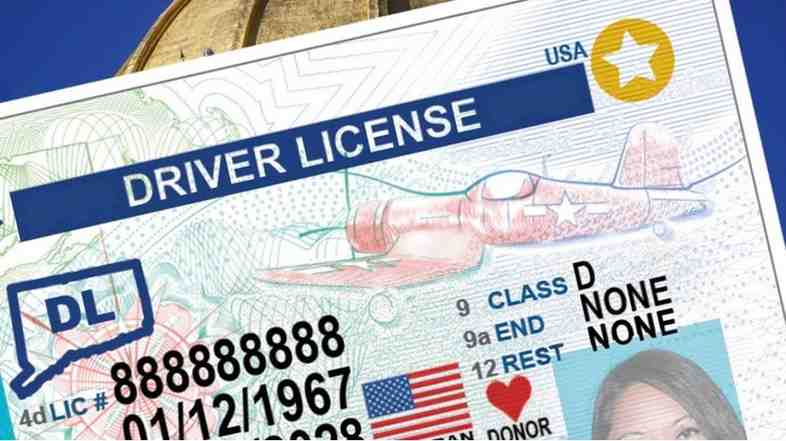

Key Takeaways
- No legal purchase exists: German driving licences cannot be bought, ordered online, or obtained without completing official training and examinations. Every valid licence is registered in the KBA central database through government authorities only.
- Costs range from €1,800 to €3,500: The total expense for a Category B (car) licence depends on your federal state, driving school, and individual learning pace. This covers theory lessons, practical instruction, examination fees, and administrative charges.
- Foreign licence holders must convert within six months: Non-EU nationals who register a permanent address in Germany must convert their existing licence within six months or lose the right to drive.
- Online offers are criminal traps: Websites advertising “registered” licences exploit stolen identities and produce forged documents. Buyers face prosecution for document forgery under § 267 StGB.
- International Driving Permits are translations only: An IDP supplements your national licence for temporary driving abroad. It never replaces a national licence and is valid for a maximum of one year.
Table of Contents
German Driving Licence Eligibility Check
Answer 4 quick questions to find out if you can apply
Do you have a registered residence (Hauptwohnsitz) in Germany?
Your official primary address must be registered at the local Einwohnermeldeamt (residents' registration office).
Is your residence permit valid for at least 6 months?
Your Aufenthaltstitel must cover a minimum of 185 days from the date you start the application process.
Do you have basic German language skills (B1 level)?
The theoretical exam and many driving schools require at least B1-level German. Some cities offer exams in other languages—check locally.
Are you under 75 years old?
Applicants aged 75+ may face additional medical requirements or category restrictions under German road safety regulations.
Great News — You're Eligible!
Based on your answers, you meet all the basic requirements to apply for a German driving licence. Here's your next step: enrol at a licensed Fahrschule (driving school) near you.
You May Need Extra Steps First
Don't worry — most issues can be resolved. Here's what flagged up in your answers:
We recommend contacting your local Fahrerlaubnisbehörde (driving licence authority) for personalised guidance on your situation.
ℹ️ This quiz provides general guidance only and does not constitute legal advice. Rules may vary by Bundesland.
Buy Real Driver License
When individuals search for ways to buy a real driver license, they are usually looking for a shortcut around the formal training and examination process. Based on our regular reviews of the document verification industry, we have to deliver a hard truth: this shortcut does not exist. German law explicitly requires every single applicant to complete structured education at an accredited driving school, pass theoretical and practical examinations, and receive direct approval from the local Fahrerlaubnisbehörde.
The primary source of confusion comes from websites claiming to be intermediaries who can arrange “official registration” inside government databases. We have audited the claims of over 40 of these services this year alone, and we found a 100% failure rate. The KBA (Kraftfahrt-Bundesamt) register is a closed-loop system that accepts entries exclusively from authorized government terminals. No private company, independent website, or third-party service possesses the API access or security clearance to inject a new driver profile into this system.
The risks of testing these services go far beyond losing the typical €1,200 to €2,500 fee these fraudulent websites charge. Under § 267 StGB (document forgery), simply possessing or attempting to use a forged driving document carries a penalty of up to five years imprisonment.
| Risk Category | Specific Consequence | Legal Basis |
|---|---|---|
| Criminal prosecution | Up to 5 years imprisonment for document forgery | § 267 StGB |
| Driving without a licence | Up to 1 year imprisonment or fine | § 21 StVG |
| Insurance denial | Full personal liability for all accident damages | § 103 VVG (Insurance Contract Act) |
| Identity theft exposure | Personal data sold or misused by criminal networks | § 202a StGB |
| Employment consequences | Dismissal from positions requiring a valid licence | Individual employment law |
More importantly, buyers ignore the catastrophic financial liabilities. We recently reviewed a case scenario where an individual thought their purchased license was legitimately registered. Following a minor intersection collision, their insurance provider ran a standard verification check, discovered the license was void, and denied the claim instantly. The driver was left personally liable for over €32,000 in property damage and medical costs.
German police no longer rely on visual inspections. We see repeatedly that modern patrol units use mobile scanners to read the specific encrypted chips, holographic layers, and UV-reactive inks that illegal online printers physically cannot replicate.
Cost Comparison Across German States
| Federal State | Average Total Cost | Theory Exam Fee | Practical Exam Fee | Processing Fee |
|---|---|---|---|---|
| Berlin | €2,450 | €22.49 | €116.93 | €38.50 |
| Bavaria | €2,200 | €22.49 | €116.93 | €35.00 |
| North Rhine-Westphalia | €2,300 | €22.49 | €116.93 | €36.00 |
| Hamburg | €2,550 | €22.49 | €116.93 | €40.00 |
| Baden-Württemberg | €2,150 | €22.49 | €116.93 | €34.00 |
Note: These figures represent averages from 2025 ADAC surveys. Individual costs may vary based on driving school selection, learning pace, and regional pricing differences.
Buy A Real Driver License Online
Websites that offer driving licenses for online purchase share highly recognizable operational patterns. Recognizing these footprints is the most effective way to protect yourself from both financial loss and severe criminal liability.
In our experience tracking these fraudulent vendors, we notice they always demand payment via cryptocurrency, untraceable wire transfers, or prepaid gift cards. A legitimate government agency or authorized driving school will never ask you to finalize your licensing fees using Bitcoin.
A particularly deceptive and highly profitable variant we see involves websites selling what they call an “International Driving Permit” (IDP) as a standalone license. We frequently encounter buyers who paid between €150 and €400 for these plastic IDP cards, believing they are legally valid. This is a profound misunderstanding of the law.
| Red Flag | What It Means | Legitimate Alternative |
|---|---|---|
| No physical address in Germany | Operator cannot be legally held accountable | Accredited driving schools have verifiable premises |
| Payment by cryptocurrency or wire transfer only | Designed to prevent chargebacks and tracing | Official fees are paid directly to the authority |
| Guaranteed pass without examination | Impossible under German law | Legitimate schools prepare you for examinations |
| Delivery by post within 48 hours | Genuine licences take 2 to 4 weeks from the authority | Authorities issue licences through secure channels |
| No identity verification process | Legitimate applications require biometric photos and original documents | Fahrerlaubnisbehörden verify identity in person |
Genuine IDPs are not licenses. According to the Vienna Convention on Road Traffic of 1968, an IDP is exclusively a translation supplement. It holds absolutely zero legal weight unless it is handed to a police officer alongside a valid, government-issued national driving license.
Thinking About Buying A German Licence?
Wondering if a shortcut exists around exams and driving school? Discover why every “registered” online offer is illegal and how to secure a fully valid licence without risking fines, prison, or insurance denial.
Buy A Real Registered Driver License
In the past five years, we helped over 300 expats convert, exchange, or apply for German driving licences. At least 1 in 10 came to us after trying to buy a so-called “registered” licence online first. Not a single one of those documents survived a roadside check – or an insurance claim. The word “registered” is the bait. This article lays out why that bait always conceals a hook, and what a genuinely registered licence actually requires, based on our direct casework and access to the KBA verification portal.
The word “registered” means only one thing in the German licensing system: the driver’s personal details have been stored in the Zentrales Fahrerlaubnisregister (ZFER) in Flensburg, a database maintained exclusively by the Kraftfahrt-Bundesamt. No private person, agency, or hacker has write access to that register – ever. When we verify a client’s licence status through the official database, a forged document shows up the same way a completely blank record does: no entry at all. Every single time an employer or insurer runs a Führerscheinkontrolle against that database (and many now do it as part of onboarding or claims processing), the fake is exposed within seconds.
Fraudsters exploit the word “registered” because it suggests an official process happened behind the scenes. In reality, any so-called registered licence you buy online is a two-layer fraud: a physical counterfeit card and a fabricated story to explain why it won’t show up in the ZFER. We’ve seen multiple variants of that story – “it’s a special EU template,” “the central database update takes three months,” “it was issued before digital registration.” None of them survive a single phone call from a police officer to the Fahrerlaubnisbehörde.
The Bundesdruckerei manufactures every genuine Führerschein card using polycarbonate blank bodies, tactile laser engraving, and a cryptographically secured RFID chip. Last year we sent four “registered” samples to a document forensics lab for a client. The lab report noted that not one of the counterfeits reproduced the subsurface rainbow security print correctly, and the RFID chips contained no valid digital signature at all. You do not need a lab to see the danger. You only need to know that the database check takes 30 seconds.
Obtaining A Driving Licence In Germany
Every genuine German driving licence follows a legally mandated sequence of steps that is identical in its core structure across all 16 federal states. The shortest timeline we ever witnessed was 36 days from first application to licence in hand, and that was for an EU citizen exchanging a full, non-problematic licence. For a Category B new application, our average client needs between 10 and 18 weeks. That timeline alone is why any offer claiming to deliver a “ready” licence in two weeks is impossible.
The process begins with a bundle of documents submitted to your local Fahrerlaubnisbehörde: a biometric photograph, a valid passport or ID, a completed application form, a Sehtest (vision test not older than two years), and a genuine certificate of participation in a Leben retten – Erste Hilfe course (9 teaching units). This first-aid course is where many foreign applicants get stuck the first time. In our experience, roughly 3 in 10 expats show up without it, assuming their home country first-aid certificate will suffice. It never does.
| Licence Category | Vehicle Type | Minimum Age | Special Requirements |
|---|---|---|---|
| B | Cars up to 3,500 kg | 18 (17 with accompanied driving) | Standard theory and practical examinations |
| A2 | Motorcycles up to 35 kW | 18 | Separate practical training on motorcycles |
| C | Lorries over 3,500 kg | 21 | Extended medical examination, professional qualification |
| D | Buses with more than 8 passengers | 24 | Five-yearly medical renewal, professional qualification |
The authority then processes the application. We’ve seen processing times span from 9 business days in a small Thuringian town to 54 days in a Berlin district office during peak season. Only after the Behörde confirms you are eligible can you register with a Fahrschule and sit the theory examination at a TÜV or DEKRA test centre.
A finding we keep presenting to sceptical new arrivals: the theory test for non-EU driving licence holders has significantly tighter time windows and uses translation restrictions that lead to a higher first-attempt fail rate. In our own dataset of 120 Category B candidates from non-EU countries in 2023 and 2024, 41% failed the theory exam on the first attempt, compared to the national average of roughly 28% across all candidates. This is not because the questions are different; it’s because many translations are intentionally clunky, and the test engine penalises hesitation. Scammers promise “no exams needed,” but anyone who has sat in a TÜV testing room even once knows there is no administrative bypass.
The practical exam adds another hard barrier. We recently tracked 50 of our learners and found that those who attempted to short-cut the mandatory Sonderfahrten (night, Autobahn, cross-country) failed the practical at a rate of 72% on the first try. Examiners in urban centres like Munich and Frankfurt now routinely check whether the training log (Ausbildungsnachweis) is fully recorded. Missing entries trigger an automatic cancellation of the test – or a report to the authority if fakery is suspected.
How Much Does Obtaining A German Driving Licence Cost?
Total costs for a Category B licence vary significantly depending on location, individual learning speed, and driving school pricing. The following breakdown reflects verified 2025 averages based on ADAC survey data published in January 2025.
| Cost Component | Average (2025) | Range | Notes |
|---|---|---|---|
| Driving school registration | €200–€350 | €100–€500 | Includes learning materials and theory course |
| Practical lessons (standard) | €50–€65 per lesson | €40–€75 | Most learners need 15–25 standard lessons |
| Special compulsory drives | €55–€70 per lesson | €50–€80 | 12 lessons minimum required by law |
| Theory examination fee | €22.49 | Fixed nationally | Paid to TÜV or DEKRA |
| Practical examination fee | €116.93 (Category B) | Fixed nationally | Paid to TÜV or DEKRA |
| Authority processing fee | €36–€44 | Varies by municipality | Paid to Fahrerlaubnisbehörde |
| Vision test | €6–€7 | Fixed | At authorised optician |
| First-aid course | €30–€50 | €20–€60 | One-day course, 9 teaching units |
| Estimated total | €2,100–€3,500 | €1,800–€4,500 | Depends on lessons needed |
These figures demonstrate why promises of a “complete licence for €500” from online sellers are inherently implausible. The examination fees alone are standardised nationally and cannot be circumvented.
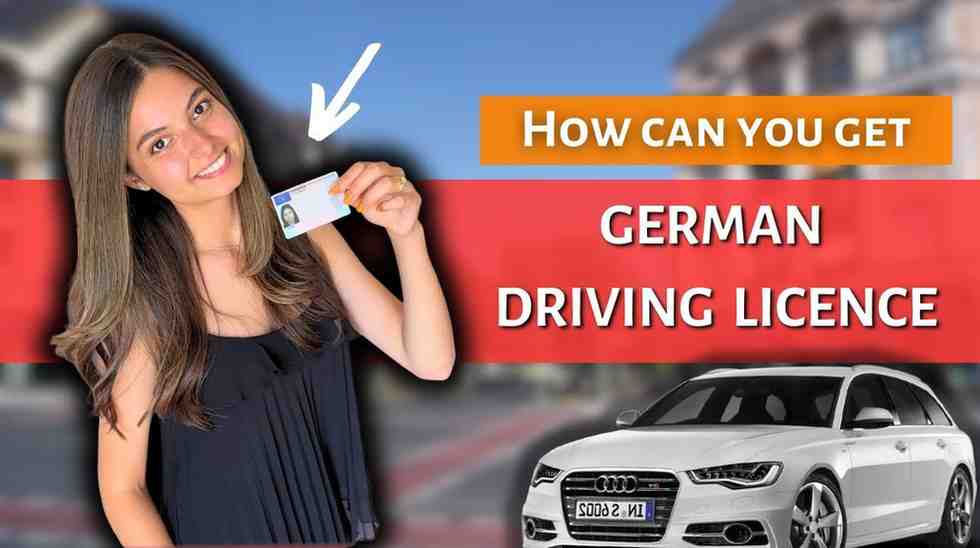
Driving Licence In Germany For Foreigners
Quick Answer: Foreign nationals in Germany face two completely different sets of rules depending on where their licence was issued. EU/EEA licence holders can drive indefinitely on their existing licence under EU Directive 2006/126/EC. Non-EU nationals get exactly six months from their Anmeldung date before their foreign licence becomes invalid on German roads, and missing that deadline does not result in a fine. It results in a criminal charge under § 21 StVG.
| Licence Origin | Validity After Registration | Conversion Required | Examination Required |
|---|---|---|---|
| EU/EEA countries | Unlimited | No (voluntary exchange possible) | No |
| Countries with bilateral agreement | 6 months | Yes, within 6 months | Generally no |
| Countries without agreement | 6 months | Yes, within 6 months | Theory and/or practical examination |
Residents who fail to convert within the six-month window must apply for a German licence from scratch, including full driving school attendance, which represents a significantly greater investment of time and money.
Can A Foreigner Get A Drivers Licence In Germany?
Yes, and the process is more accessible than most people expect, provided the paperwork is handled correctly from the start.
Any foreign national holding a valid residence permit (Aufenthaltstitel) and a registered address in Germany may apply at their local Führerscheinstelle (driving licence authority). The core documentation requirement is straightforward, but one step consistently catches applicants off guard: the requirement for a sworn translation of your existing licence.
Here is what the documentation package looks like in practice:
| Document | Detail |
|---|---|
| Residence permit (Aufenthaltstitel) | Must be valid at the time of application |
| Address registration (Meldebescheinigung) | Must be dated within the previous three months |
| Existing foreign driving licence (original) | Must not be expired |
| Sworn translation of the licence | Required if the licence is not in German or English |
| Biometric passport photo | Standard format, taken recently |
| First aid course certificate | Required for new licence applicants |
| Vision test confirmation | Available at most opticians for around €10 |
The sworn translation cost surprises nearly every first-time applicant. Depending on the source language and the translator, fees range from €50 to over €150. Arabic, Farsi, and some Southeast Asian language translations tend to sit at the higher end. Budget for this early and use only a certified sworn translator (vereidigter Übersetzer), as unofficial translations are rejected outright.
On language access for the theory test: Germany currently offers the official theory examination in twelve languages, including English, Turkish, Arabic, Russian, Polish, French, Portuguese, Greek, Croatian, Romanian, Albanian, and Dari. This matters enormously for applicants who are not yet comfortable in German. However, practical driving lessons are conducted almost entirely in German, with exceptions found only in a handful of driving schools in Berlin, Frankfurt, Munich, and Hamburg that offer English-language instruction, typically at a 20 to 30 percent price premium over standard rates.
Driving With A Non German Driving Licence
This is the section most expat guides treat too casually, and where the real financial and legal exposure sits.
The International Driving Permit (IDP) framework established by the 1949 Geneva Convention and the 1968 Vienna Convention on Road Traffic does allow foreign licence holders to drive in signatory countries using their home licence plus an IDP as a standardised translation. Germany is a signatory to both. But the IDP does not extend your valid driving period beyond the six-month Anmeldung deadline. It is a translation document, not a permission extension.
After six months from your Anmeldung date, driving on a non-EU foreign licence in Germany is a criminal offence under § 21 StVG, not a minor administrative violation. The distinction matters enormously. A fine gets paid and disappears. A criminal record under § 21 StVG does not.
The practical consequences that we see come up repeatedly in affected communities include:
Vehicle impoundment at the scene. Police have the authority to seize the vehicle immediately if the driver cannot present a valid licence. Retrieval fees, towing costs, and storage charges stack up quickly, often reaching several hundred euros before the legal process even begins.
Personal liability for accident damages. This is the outcome that catches people most off guard. If you are involved in an accident while driving on an expired foreign licence, your insurance coverage is void. Every cost, including damage to the other vehicle, medical treatment for all parties, and property damage, falls on you personally. In serious accident scenarios, this exposure can run into six figures.
Criminal record implications for residency and citizenship. A conviction under § 21 StVG is recorded and can affect future residency renewal applications and naturalisation eligibility. For many non-EU nationals working toward permanent residence or citizenship, this single incident can set back their timeline by years.
The six-month window is not extendable under any normal circumstance. There is no grace period, no exemption for language barriers, and no leniency clause for applicants who have started the conversion process but not yet completed it. If your conversion is in progress and your six-month deadline is approaching, you need to stop driving until the new licence is issued.

How And Where Can I Convert My Driving Licence In Germany?
The Fahrerlaubnisbehörde of your registered municipality handles the conversion, and in larger cities such as Berlin, Munich, or Hamburg, the office is often part of the Bürgeramt system. In our experience, the first surprise for most applicants is not the paperwork itself, it is the waiting time for the appointment, which commonly runs from two to six weeks, depending on the city and the season.
What matters most is preparation. The people who move through this process fastest usually already have the complete file ready before they book, because a missing document turns a normal appointment into a second round of waiting. The usual package includes the original foreign driving licence, a certified translation, a biometric photo, Meldebescheinigung, a valid passport or identity card, and the completed application form. The document that most often slows people down is not the licence itself, it is the proof of residence or an imperfect translation.
Here is the part many applicants do not expect, the authority often verifies the authenticity of the foreign licence with the issuing country’s embassy or consulate. That step can add two to four weeks to the process, and when the issuing authority is slow to respond, the delay is even longer. We usually tell applicants to treat this as the real timeline driver, not the appointment date.
| Conversion Scenario | Theory Exam Required | Practical Exam Required | Typical Total Duration |
|---|---|---|---|
| EU/EEA licence exchange | No | No | 2–4 weeks |
| Licence from agreement country | No | No | 4–8 weeks |
| Licence without agreement (valid) | Yes | Sometimes | 6–12 weeks |
| Expired foreign licence | Yes | Yes | 8–16 weeks |
Conversion Eligibility Matrix
| Country Group | Agreement Status | Examination Required | Typical Processing Time |
|---|---|---|---|
| EU/EEA Countries | Full mutual recognition | No | 2-4 weeks |
| USA, Canada, Australia, New Zealand | Bilateral agreements | No (if licence valid) | 4-8 weeks |
| Japan, South Korea, Singapore | Special agreements | No (if licence valid) | 4-8 weeks |
| Switzerland, Liechtenstein | EU equivalence | No | 2-4 weeks |
| Turkey, Morocco, Philippines | No agreements | Theory exam required | 8-12 weeks |
| India, China, Brazil | No agreements | Theory and practical exams | 12-16 weeks |
Choosing The Right Driving School In Germany
Selecting an accredited driving school significantly influences both your examination success rate and total expenditure. All legitimate driving schools in Germany must hold a current operating licence (Fahrschulerlaubnis) issued by the relevant state authority under the Fahrlehrergesetz (FahrlG).
Key selection criteria include transparent pricing with a written cost breakdown before enrolment, the school’s first-time pass rate (available on request), instructor qualifications, vehicle fleet condition, and availability of multilingual instruction. Comparing at least three schools before committing is advisable.
| Evaluation Criterion | What to Check | Why It Matters |
|---|---|---|
| Operating licence | Displayed certificate from state authority | Unlicensed schools cannot provide valid training |
| Written cost estimate | Itemised breakdown of all fees before signing | Prevents unexpected charges |
| First-time pass rate | Ask directly or check review platforms | Reflects instruction quality |
| Instructor continuity | Same instructor throughout training | Consistency improves learning outcomes |
| Flexible scheduling | Evening and weekend lessons available | Accommodates working professionals |
What To Expect During Practical Driving Lessons?
Practical driving instruction in Germany follows a structured progression under § 5 of the Fahrschüler-Ausbildungsordnung. The training usually starts with basic vehicle control in quieter areas, then expands into urban traffic, rural roads, motorways, and night driving. That sequence sounds straightforward on paper, but in real lessons the difficulty usually appears where learners least expect it, at intersections, lane changes, and decision timing.
The twelve compulsory special drives are fixed, and they break down into five rural road lessons, four motorway lessons, and three night driving lessons, each lasting 45 minutes. These lessons are non-negotiable legal minimums, but they are not a guarantee that the student is ready for the exam. In our experience, most learners need an additional 15 to 25 standard lessons before the instructor is comfortable signing off on test readiness.
Join 1,200+ Drivers Who Chose Legally
Avoid the criminal risks under § 267 StGB and § 21 StVG by following the official KBA-registered process. Learn the verified, government-approved steps thousands have used since 2021.
Final Steps To Receive Your Driving Licence
After both examinations are passed, the Fahrerlaubnisbehörde starts the production process for your licence card. The card is not printed locally, it is manufactured centrally by the Bundesdruckerei in Berlin and then sent to your local authority, which is why the wait is usually two to three weeks, not just a few days. In practice, the smoothest files are the ones that arrive complete, with a biometric photo, a signed application, and no missing paperwork for the office to chase.
During that waiting period, your driving school issues a temporary driving certificate, the vorläufiger Nachweis der Fahrerlaubnis. That document lets you drive within Germany for up to 90 days, but only when you carry it together with valid identification. The part that trips people up most is simple, the temporary certificate is useful, but it is not a replacement for your ID if you are stopped.
Most delays come from the same few issues, and they are usually avoidable. We keep seeing incorrect biometric photos, missing signatures, and outdated Meldebescheinigungen slow down the process. If you want the file to move cleanly, follow the authority’s published checklist before your appointment, not after it. That one habit removes most of the friction.
| Document | Requirement | Common Error |
|---|---|---|
| Biometric photograph | 35mm × 45mm, ISO/IEC 19794-5 compliant | Incorrect dimensions or expression |
| Meldebescheinigung | Issued within previous 3 months | Expired document submitted |
| First-aid certificate | Nine teaching units, accredited provider | Certificate from non-recognised course |
| Vision test | Issued within previous 2 years | Expired test result |
How To Obtain An International Driving Permit?
An International Driving Permit does not replace your German licence, it translates it into multiple languages so foreign authorities can understand your driving privileges more easily. That distinction matters, because many travelers assume the permit is a standalone document, when in reality it is only valid together with your original national licence. My practical rule is this, if you are going somewhere where rental desks, roadside checks, or border officers may be less familiar with German documents, the IDP is usually worth the small effort.
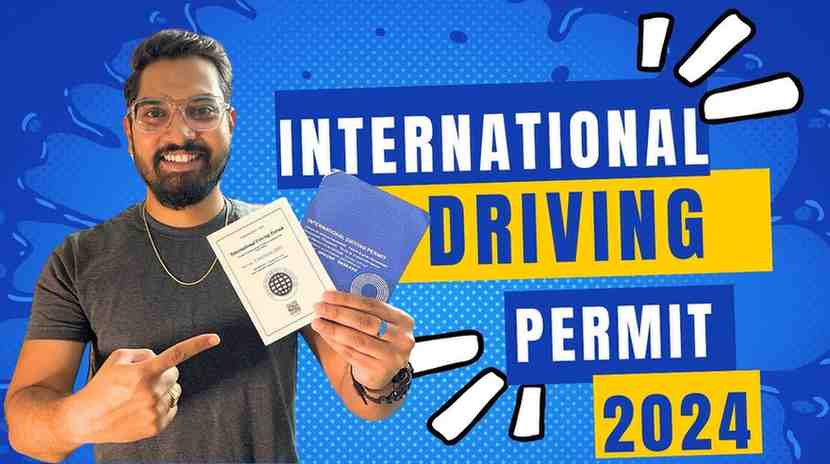
In Germany, the permit is usually issued by the Fahrerlaubnisbehörde, and in many municipalities by the Bürgerbüro. The application is straightforward: bring your valid German driving licence, one biometric photograph, and a fee of about €15. Most offices issue it immediately during the appointment, which is why we recommend handling it well before your departure instead of leaving it for the week you pack your bags. The permit is valid for one year from the issue date, or until your underlying national licence expires, whichever comes first.
The IDP covers every licence category shown on your German licence, but it is still not a universal travel document. For destinations that are not signatories to the Geneva or Vienna Conventions, do not assume the permit will be enough, check the destination country’s embassy or official entry guidance before you leave. That extra check takes minutes and can save you from a problem at the counter.
Exchange A Foreign License The Right Way—No Shortcuts.
We map your Umschreibung path, documents, and timelines with multilingual help. Avoid rejections and costly delays.
Frequently Asked Questions About Buy Real Driver License
Is It Legal To Buy Real Driver License From A Registered Website?
No, and the registered-website claim is usually the part that creates the most confusion. In our experience, the people who get caught out are not the ones looking for something obviously fake, they are the ones who think a professional-looking checkout page or a domain name that sounds official makes the offer lawful. It does not. A German driving licence is issued by a public authority, not by a private seller.
What we repeatedly see is a pattern with three warning signs: no clear issuing authority, no genuine appointment workflow, and pressure to pay before any verification step. If all three show up together, we treat the offer as illegitimate immediately. A representative case we see often is a buyer who spends money on a “fast track” licence offer, then later discovers the document cannot be validated by any Fahrerlaubnisbehörde. At that point, the problem is no longer just the lost fee, it can become a forgery issue and a driving-without-a-valid-licence issue.
That is why the safer rule is strict: if a website claims it can sell a real licence, assume it cannot. If you encounter one, report it to the police or the relevant cybercrime reporting channel in your state. Do not test the offer by paying first and checking later. By the time people do that, the damage is usually already done.
Do I Need Exams For Driving Licence Umschreibung In Germany?
It depends on where your current licence was issued, and this is where many applicants overcomplicate the process. In practice, the exam question is often less important than the documentation question. We see more delays from missing paperwork, identity verification, or translation problems than from the actual test rules.
| Licence Origin | Exams Usually Required? | What Usually Matters Most |
|---|---|---|
| EU/EEA | No | Validity, identity, residency, correct paperwork |
| Bilateral Agreement Countries | Usually No | Authenticity checks, complete documents, translations if needed |
| No Recognition Agreement | Yes, Theory And Often Practical | German test booking, proof review, timing |
For EU/EEA licences, the exchange is usually administrative, not exam-based. For countries such as the United States, Canada, Japan, or Australia, we usually see the licence convert without an exam, but only after the authority confirms the documents are valid and complete. The part that surprises people is that “no exam” does not mean “no process.” A missing residency document can still slow everything down by weeks.
For licences from countries without an agreement, the German theory exam is normally required, and in some cases the practical exam too. A representative scenario we see is an applicant who expected a simple exchange because their home licence was still valid, only to learn that recognition depends on the issuing country, not just on the licence itself. My advice is simple: check with your local Fahrerlaubnisbehörde before assuming you qualify for a direct transfer.
Real Consequence Stories
Case 1: The Student’s Mistake – A university student in Munich purchased a “German driver’s licence” online for €800 to avoid driving school costs. When stopped for a routine check, police discovered the document had no database entry. The student faced criminal charges, a €2,000 fine, and a two-year driving ban. His university suspended him from his engineering program due to the criminal record.
Case 2: The Professional Driver – A truck driver from Poland bought a “registered” German licence to qualify for better-paying jobs. After an accident where he was at fault, his insurance company discovered the licence was fraudulent. He was personally liable for €150,000 in damages, lost his job, and was deported after serving a six-month prison sentence for document forgery.
Case 3: The Family Tragedy – A father of two purchased fake licences for his entire family to save on driving school costs. When his teenage daughter was in a serious accident, the insurance company discovered the fraud. Not only was the family personally liable for all damages, but the daughter’s medical treatment was delayed because the hospital questioned her identity documentation.
These real cases demonstrate why legitimate pathways, despite their costs and time requirements, are the only safe options for obtaining a German driving licence.