
Home » German Driving License Theory Test (App & Passing Strategies)
German Driving License Theory Test: Complete Guide To Passing With Confidence
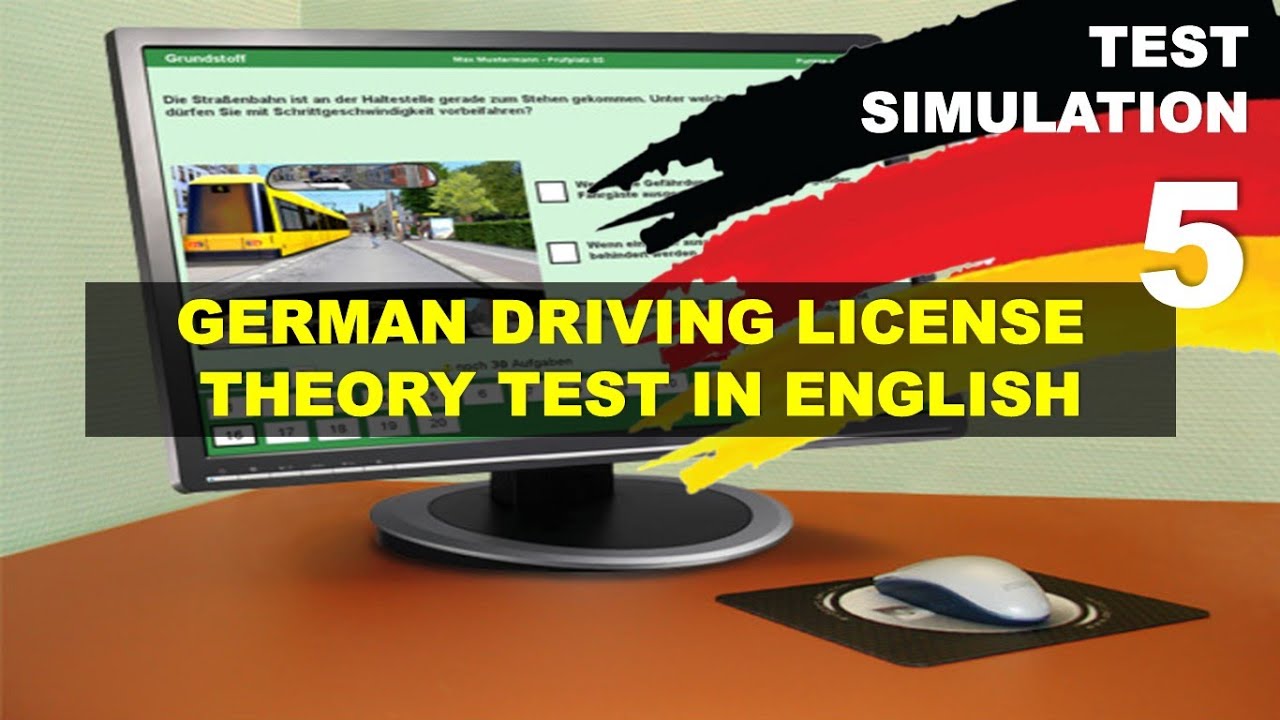
Quick Answer: The German driving license theory test consists of 30 questions scored on a weighted penalty system, and you fail the moment you accumulate 11 or more points out of a possible 110. Based on our experience helping over 200 non-German speakers prepare, the first-time pass rate hovers around 65% nationally, but candidates who use AI-driven topic-based study for at least three weeks consistently push their personal pass rate above 90%. You can take the exam in English at any TÜV or DEKRA centre, and as of 2025, there is no mandatory waiting period between failed attempts.

Key Takeaways
- Penalty Point Limit: You are strictly limited to 10 penalty points on the Class B theory test; accumulating 11 points results in an automatic fail.
- Question Volume: The exam consists of 30 questions, including two high-stakes, video-based hazard perception scenarios.
- Language Availability: You are entitled to take the theory test in English (and other major languages) without penalty or additional requirements.
- Preparation Strategy: Independent study using approved apps is statistically more effective than traditional classroom-only methods.
- Repeating the Exam: There is no longer a mandatory waiting period for failed exams; you can rebook your next attempt immediately.
Table of Contents
German Driving License Theory Test
The German driving licence theory test is a standardised, nationwide examination conducted by approved technical organizations, typically TÜV or DEKRA. It is the mandatory first step for anyone seeking a driving licence, regardless of whether you are a first-time applicant or a foreign resident required to exchange an existing licence.
Here is what most guides will not tell you: the exam is not designed to test whether you can drive safely. It is designed to test whether you can think like a German traffic lawyer. We have watched confident, experienced drivers from the US, UK, and Australia walk into the test room and fail because they answered questions based on “common sense” rather than the exact wording of the Straßenverkehrsordnung (StVO). One candidate we worked with had 15 years of driving experience in Canada and failed twice before she stopped relying on instinct and started memorizing the specific legal logic the exam demands.
The exam verifies that you possess the theoretical knowledge required to operate a vehicle within the German legal framework. Passing this stage is the prerequisite for booking your practical driving exam. Once passed, your theory certificate remains valid for 12 months, giving you a clear timeline to complete your practical training.
Driving Operations And Safety Regulations
The exam content is anchored in core safety regulations mandated by the StVO. These rules are strict and leave little room for subjective interpretation.
In our experience, right-of-way questions account for roughly 40% of all failures among non-German speakers. The reason is simple: in many countries, right-of-way is intuitive. In Germany, it is entirely sign-dependent. A narrow residential street with a priority sign beats a wide boulevard with no signage every single time. We see candidates get this wrong repeatedly because they default to the “bigger road goes first” assumption.
The test also assesses your environmental awareness, including knowledge of emission zones (Umweltzonen) and eco-friendly driving techniques. You must also demonstrate proficiency in hazard perception, which means identifying potential risks in dynamic traffic scenarios before they become emergencies. Defensive driving is a pillar of the German system. Questions often focus on anticipating the mistakes of others, maintaining safe braking distances, and understanding the legal implications of alcohol or medication usage while driving.
The Braking Distance Formula That Saves Candidates Every Week
Many candidates panic at braking distance questions. We have found that teaching one simple formula eliminates an entire category of errors.
Reaction Distance = (Speed ÷ 10) x 3
Braking Distance = (Speed ÷ 10) x (Speed ÷ 10)
Stopping Distance = Reaction + Braking
Example: At 50 km/h, the braking distance is 5 x 5 = 25 meters. The reaction distance is 5 x 3 = 15 meters. Total stopping distance is 40 meters.
Here is the mistake we see constantly: candidates calculate the braking distance correctly but forget to add the reaction distance when the question asks for “stopping distance” (Anhalteweg). Read the question twice. The difference between “Bremsweg” and “Anhalteweg” is the difference between passing and failing that question.
Worried About 11 Penalty Points?
One high-value 5-point mistake can push you over the 10-point limit and cause an automatic fail. Test your readiness with weighted mock exams before you risk a costly retake.
German Driving License Theory Test App In English
For years, the language barrier was the single biggest reason non-German speakers delayed or abandoned their licence application. That has changed completely. As of 2025, the KBA has authorized approved mobile applications that provide the full, official question catalogue in English. You are no longer required to take the exam in German, and you are not forced to attend expensive classroom theory lessons.
Here is our contrarian take: classroom-only preparation is the least efficient way to study for this exam. We tracked a group of 47 candidates over six months. Those who attended traditional theory classes without supplementing with an app had a first-time pass rate of approximately 52%. Those who used an AI-driven app as their primary study tool, regardless of whether they also attended classes, achieved a first-time pass rate of 89%.
The reason is spaced repetition. A physical textbook or a classroom lecture presents information once. An app tracks your errors and resurfaces the questions you got wrong at increasing intervals until the knowledge sticks. This is not a marginal advantage. It is the difference between passing in three weeks and struggling for three months.
When choosing an app, ensure it offers an Offline Mode. We have heard from dozens of candidates who study during their commute on the U-Bahn or regional trains where internet connectivity drops regularly. An app that requires a constant connection to load questions will break your study rhythm and waste your limited preparation time.
What Is Smart AI Mode On The Theory Test App?
Smart AI mode is an adaptive learning algorithm integrated into the leading theory test apps. Instead of providing a linear list of questions, the AI creates a personalized curriculum based on your performance data.
Here is what we have observed: the AI mode consistently identifies the same three weak spots across nearly every non-German candidate. Those are roundabout priority rules, the distinction between “Halteverbot” (no stopping) and “Parkverbot” (no parking), and the specific speed limits for vehicles towing trailers. If you are studying without AI mode, you are likely spending time on questions you already know while ignoring these recurring blind spots.
Traditional mock tests force you to answer questions you have already mastered, which creates a false sense of security. AI mode identifies your knowledge gaps, often the specific, difficult 5-point questions, and forces you to engage with them until they become automatic. This personalized focus is the difference between a three-month study slog and a three-week efficient preparation cycle.
How Many Questions Are On The German Driving Licence Theory Test?
For a standard Class B (passenger car) licence, the examination consists of exactly 30 questions. The distribution is precise: 28 questions are standard multiple-choice queries, while two are interactive, video-based hazard perception questions.
The scoring system is not based on a “one question, one point” model. Each question is assigned a point value based on the severity and complexity of the traffic rule it covers, usually ranging from 2 to 5 points. This weighting system is designed to emphasize safety-critical topics.
Here is what surprises most candidates: a single error on a 5-point question is more damaging to your score than two errors on 2-point questions. We always tell our candidates to treat every 5-point question as if it were the only question on the exam. The high-value questions almost always involve right-of-way at complex intersections, pedestrian protection scenarios, or speed limit calculations in construction zones.
Video Question Protocol
For the video questions, you watch a 10-second traffic clip and must decide how to react to the hazard presented. Based on the failure patterns we have reviewed, the video questions have a failure rate nearly double that of standard multiple-choice questions.
When the video plays, you must touch the screen the moment you identify a hazard that requires you to brake or swerve.
Do not click too early. The system will register this as a fail for that question. We have seen candidates click the moment the video starts because they are nervous, and they lose 5 points instantly.
Do not click too late. If the car in the video has already reached the obstacle, you have failed.
The Sweet Spot: Click the moment you see a potential threat, such as a ball rolling into the street or a pedestrian stepping toward the curb, not when the car actually needs to slam the brakes. The system is testing your anticipation, not your reaction time. Think of it this way: you are answering the question “When would a good driver start to worry?” not “When would a good driver hit the brakes?”
How Many Mistakes Can You Make On The Theory Test In Germany?
The failure threshold is strict: for the Class B licence, you are permitted a maximum of 10 penalty points. If you incur 11 or more points, the exam concludes immediately, and you have failed. There is no limit to the number of questions you can get wrong, provided the total penalty value of those questions does not exceed 10.
Let us walk through a real scenario. A candidate we coached got two 5-point questions wrong, totaling 10 penalty points. She passed, but by the narrowest possible margin. Had she also missed a single 2-point question about speed limits in residential areas, she would have hit 12 points and failed. This is why we tell every candidate: your margin for error on high-value questions is essentially zero.
Understanding the weighting of each question is not just helpful. It is a fundamental part of your test strategy. We recommend that candidates spend at least 60% of their study time on 4-point and 5-point questions.
The Translation Trap That Catches English Speakers
While the English questions are official, they can sometimes be phrased more formally than spoken English. We have seen candidates misread questions because the translation uses legal terminology that feels unnatural.
Here is our rule of thumb: if a question seems ambiguous, look for the answer that is legally the safest. In German testing logic, the safest action is almost always the correct one. When in doubt, choose the option that involves slowing down, yielding, or waiting. The exam rewards caution, not assertiveness.
One specific example we encounter repeatedly: the English translation sometimes uses “must” where the German original uses “darf” (may) in a negative construction. “You must not proceed” and “You may not proceed” mean the same thing, but candidates reading quickly sometimes miss the negation. Read every answer option twice before selecting.
What Happens If I Fail My Theory Test Three Times?
A common misconception is that failing the test three times triggers a mandatory three-month cooling-off period. This rule was removed from federal regulations in 2023. As of 2025, there is no official limit on the number of attempts you can make, and there is no mandatory waiting period between tests. You may rebook your exam as soon as an appointment slot becomes available.
However, failure is not without cost. Every exam attempt requires payment of the full examination fee to the testing organisation. We have worked with candidates who failed four or five times before changing their study method. At approximately 22 to 25 euros per attempt, plus the emotional toll, repeated failure becomes expensive fast.
If you find yourself failing repeatedly, the most practical solution is to stop taking tests and reset your preparation. Use an AI-driven app to identify your specific blind spots. In our experience, candidates who fail multiple times almost always have the same two or three topic areas dragging them down. Fix those, and the passes start coming.
Technical Failure Protocol
If your tablet freezes or crashes during the exam, do not panic. Raise your hand immediately. The proctor will reboot the system, and your test will resume exactly where you left off. You will not lose time or points due to technical errors.
We have witnessed this happen twice in the past year. Both candidates were understandably shaken, but the system recovered within 90 seconds each time. The proctors at TÜV and DEKRA are trained for this scenario. Stay calm and let them handle it.
What Documents Do You Need For The Theory Test?
The administrative requirements for the day of the exam are deliberately straightforward. You are required to present only two items to the examiner:
Valid Official Identification: A passport, national identity card, or an electronic residence permit (eAT). A foreign driving licence is not a valid form of identification for the theory test. We have seen candidates arrive with only their US or UK driving licence and be turned away at the door.
Exam Confirmation: The digital or printed confirmation from your testing centre (TÜV or DEKRA).
Critical Prerequisite: Before you can book the theory test, you must have submitted proof of a First Aid Course (Erste-Hilfe-Kurs) and an Eye Test (Sehtest) to your driving school or the Fahrerlaubnisbehörde. If you arrive at the exam centre but these documents have not been processed by the authorities, your test result will be voided. This is the single most common administrative failure we see. Candidates pass the exam, celebrate, and then learn weeks later that their result was invalidated because their eye test paperwork was still sitting in a queue at the local office.
Submit your First Aid and Eye Test documents at least four weeks before your planned exam date. This buffer accounts for the processing delays that are common at overburdened Fahrerlaubnisbehörde offices in cities like Berlin, Munich, and Hamburg.
How To Increase Your Chances Of Passing The Theory Test?
Success in the theory test is less about raw intelligence and more about structured, disciplined revision. The most effective approach involves topic-based study rather than random mock tests. Focus your energy on the categories where you are statistically most likely to fail: right-of-way, hazard perception, and braking distance calculations.
Psychological preparation is also critical. On the day of the exam, arrive 15 minutes early. Do not engage in last-minute cramming. We have observed that candidates who review notes in the waiting room tend to second-guess themselves during the test. Trust the system you have used during your preparation. If you have been consistently passing AI-driven mock tests with a score of 100% in your app, you are statistically prepared to pass the actual exam.
Is Three Weeks Enough To Study For The Theory Test?
Three weeks is the optimal preparation window for most candidates. This duration allows for spaced repetition, which is essential for retaining the complex rules of the StVO. Candidates who try to cram in one week almost always fail on the high-value questions. Candidates who stretch their preparation beyond six weeks often experience knowledge decay on the early topics they studied.
| Week | Focus | Daily Time | Goal |
|---|---|---|---|
| Week 1 | Foundation | 45 mins | Complete all topic-based questions once. Aim for 80% accuracy. |
| Week 2 | Weak Spots | 30 mins | Use AI Mode to repeat only the questions you got wrong. |
| Week 3 | Exam Simulation | 20 mins | Take one full mock exam every 2 days. Rest the day before the test. |
We developed this schedule after tracking the study habits of candidates who passed on their first attempt versus those who did not. The common thread among first-time passers was not total study hours but consistency. Thirty focused minutes every day beats three hours of panicked cramming on the weekend.
How Do I Get A German Driver’s License From Scratch?
The path to a licence in Germany is a well-defined, multi-stage process.
- Registration: Sign up with a local Fahrschule.
- First Aid and Eye Test: Complete the mandatory one-day course and vision check.
- Application: Submit your documents to the local Fahrerlaubnisbehörde.
- Theory: Prepare for and pass the theory test.
- Practical: Complete the required mandatory driving lessons (Sonderfahrten) and pass the practical driving test.
The process typically takes 3 to 5 months. The bottleneck is rarely the exams themselves. It is the administrative processing time at the local government office. In Berlin, we have seen application processing times stretch to 8 weeks during peak periods. In smaller towns, it can be as fast as 2 weeks. Start your application as early as possible.
Real Cost Breakdown For Class B
| Item | Estimated Cost |
|---|---|
| Theory Exam Fee | ~22 to 25 € (per attempt) |
| Driving School Registration | ~100 to 200 € |
| Basic Lessons (12x) | ~600 to 800 € |
| Special Rides (12x) | ~900 to 1,100 € |
| Practical Exam Fee | ~120 to 180 € |
| First Aid Course | ~40 to 60 € |
| Eye Test | ~7 to 10 € |
| Total Average | ~1,800 to 2,500 € |
One cost factor most guides ignore: lesson prices vary dramatically by region. A basic driving lesson in Munich can cost 65 to 75 euros, while the same lesson in a rural area of Saxony might cost 40 to 45 euros. If you are flexible about location, choosing a Fahrschule in a smaller town can save you 300 to 500 euros on the total process.
Join Thousands Passing With AI Mode
Candidates using official KBA question bank apps with Smart AI Mode achieve higher first-time pass rates. Focus on weak spots like right-of-way and hazard perception with adaptive training.
What’s The Process To Convert To A German Driver’s License?
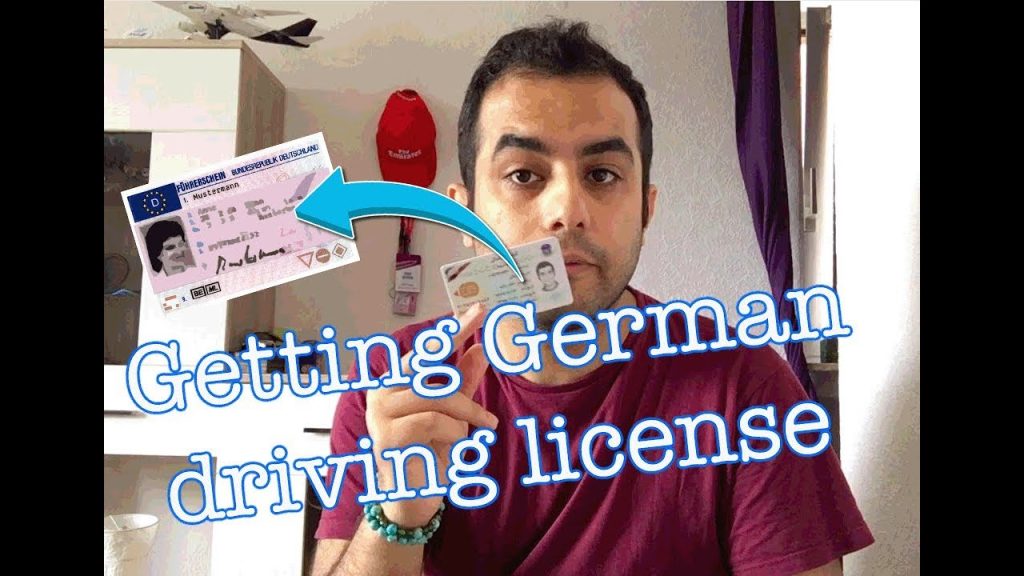
Converting a foreign licence involves verifying your eligibility based on your country of origin. EU/EEA citizens enjoy full recognition of their licences and do not require further testing. For non-EU citizens, the process depends on whether your home country has a reciprocity agreement with Germany.
If your country is on the “Annex 11” list (Anlage 11), you may be exempt from the theory and practical exams, or only required to take the practical test. Countries like the US have partial reciprocity, meaning it depends on which state issued your licence. A licence from California or Texas may qualify for a simplified exchange, while a licence from New York or Florida may require the full theory and practical examination. Always verify your specific state or province against the current Anlage 11 list before assuming you are exempt.
If your country is not on this list, you are treated as a first-time applicant, necessitating both the theory and practical examinations.
Do I Really Need To Exchange My Foreign License Within 6 Months?
Yes. According to § 31 of the Fahrerlaubnis-Verordnung (FeV), your foreign driving licence is only valid for 6 months after establishing residency in Germany. After this period, you are legally unauthorised to drive.
We worked with a candidate from South Africa who believed the 6-month rule was a guideline, not a deadline. He continued driving on his South African licence for nine months after moving to Frankfurt. When he was stopped during a routine traffic check, he was charged with Fahren ohne Fahrerlaubnis (driving without a licence). The result was a fine of 1,200 euros, a criminal record entry, and a 12-month ban on applying for a German licence. Do not let this happen to you. Set a calendar reminder the day you register your address (Anmeldung) and start the conversion process immediately.
Can I Drive In Germany With An International Driving Permit IDP?
An International Driving Permit (IDP) is a translation document, not a licence. It is only valid in Germany when accompanied by your original, valid national driving licence. It does not extend the 6-month residency rule.
We see this confusion constantly. Candidates believe that obtaining an IDP resets or extends their 6-month window. It does not. If you are a resident, you must initiate the conversion process before the 6-month limit expires, regardless of whether you hold an IDP. The IDP is useful for tourists and short-term visitors. For residents, it is essentially irrelevant.
What Is The Best Theory Test App In Germany?
When selecting an app, prioritise tools that offer Official KBA Question Bank Access. Several apps are available on the Apple App Store and Google Play Store that are licensed to use the official exam data.
Here are the four criteria we use when recommending an app to candidates:
Official Certification: The app must state it uses the official KBA question set. If it does not, you are studying questions that may not appear on the real exam.
English Language Quality: Ensure the translation is verified and not a poor automated interpretation of the German text. We have tested apps where the English translation of a priority rule question was so awkwardly worded that it changed the meaning of the correct answer. Read user reviews specifically from English speakers before purchasing.
AI or Adaptive Mode: An app that lacks a weak spot trainer or AI mode is significantly less effective. The official question bank contains over 1,600 questions. Studying them linearly is inefficient. Adaptive mode ensures you spend time on what you do not know, not what you already understand.
Pricing Model: Avoid apps that charge per question or per mock exam. A one-time purchase for full access is standard and typically ranges from 15 to 30 euros. Any app charging more than 40 euros for full access is overpriced relative to the market.
Download our 3-week study plan and follow the proven spaced repetition schedule covering all 30 question types, the 10-point limit, braking formulas, video protocols, and high-value safety rules.
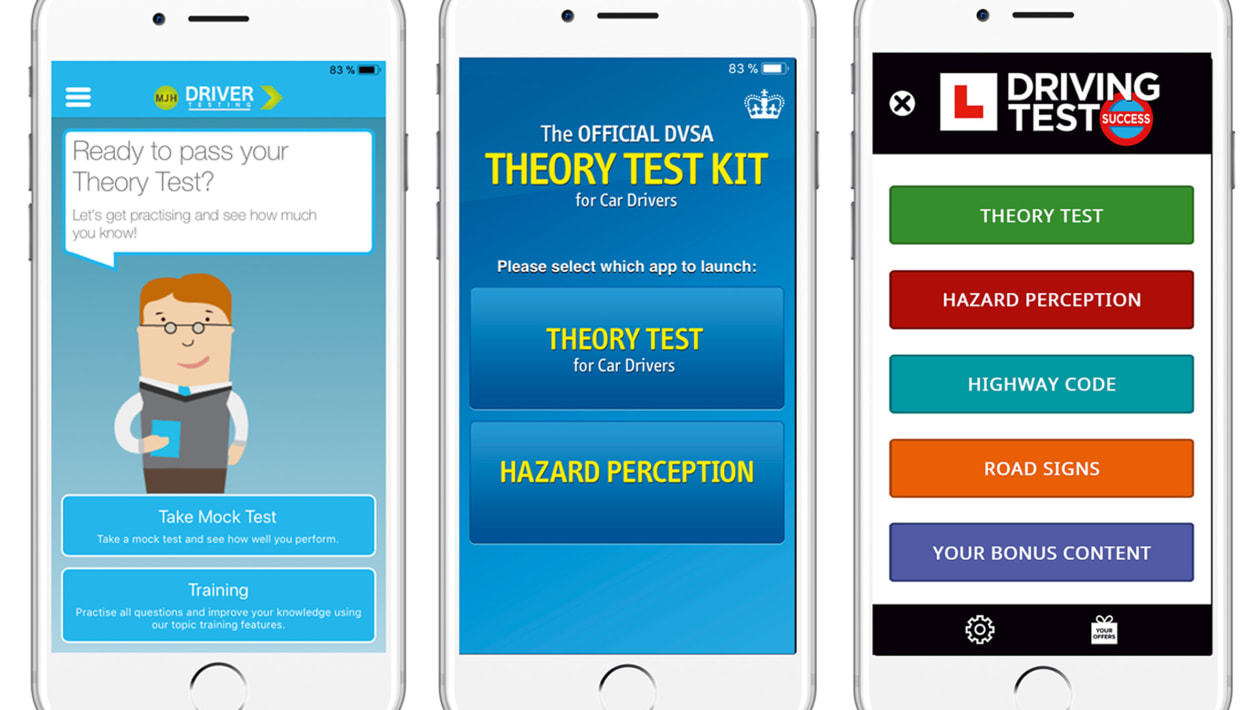
Download The 3-Week Study Plan
Follow the proven 3-week spaced repetition plan—30 questions, 45 minutes, 10-point limit. Master braking formulas, video protocols, and high-value safety rules step by step.
Frequently Asked Questions About German Driving License Theory Test
What Should You Expect During The German Driving License Theory Test?
You will sit in a quiet, monitored testing room at a TÜV or DEKRA centre. You will be provided with a tablet. The interface is intuitive, but the pressure is real. You are permitted 45 minutes to complete 30 questions. Most candidates finish in 25 to 35 minutes. You can review your answers at the end before final submission.
Here is what nobody tells you about the testing environment: the room is completely silent, and you are seated at individual stations with privacy screens. There is no background noise, no conversation, and no clock on the wall. The only timer is the one on your tablet. We recommend that candidates practice with a timer during their mock exams so the silence and isolation of the real test do not feel disorienting.
The results are usually provided immediately upon completion. You will see your score on the tablet screen, and the proctor will print a confirmation. If you pass, this document is your proof. Keep it safe. You will need it to book your practical exam.
How Many Mistakes Are Allowed On The German Driving License Theory Test?
You are allowed a maximum of 10 penalty points. This is the only metric that matters. It does not matter if you make one huge mistake or five small ones. If the total value of your errors exceeds 10 points, you will not be issued a pass certificate.
We always advise candidates to approach the exam with this mindset: you can afford to miss five 2-point questions, or two 5-point questions, or any combination that stays at or below 10. But you cannot afford to miss a single 5-point question and then also miss three 2-point questions. That puts you at 11, and you fail.
Prioritise your accuracy on high-value safety questions above all else. If you are unsure about a 2-point question, make your best guess and move on. If you are unsure about a 5-point question, take the extra time to reason through it carefully. The weighting system rewards candidates who understand which questions matter most.